Are you certain you want to major in Communications but uncertain which concentration to pursue? This post will highlight the similarities, differences and unique traits of each of the three most popular concentrations.
HEALTH COMMUNICATION
The Health Communication program revolves around informing students on how to communicate awareness and influence decisions on common public health issues. Texas State requires Health Communication students to take courses like Health Communication, Interpersonal Communication and Health Communication Campaigns.
Why is this concentration important? Health care issues affect millions of Americans each year. It is important to be able to effectively develop communication strategies that the average American and the media can understand. Consider the current Coronavirus pandemic. In order for the public to understand the Coronavirus, they need to be able to be given concise information that is easy to understand but still accentuates the gravity of the situation.
What makes this concentration stand out? Health Communication majors are able to apply communications and marketing theories to health issues, emphasize communication’s role in the health care industry and analyze health information.

Photo by ThisIsEngineering on Pexels.com
DIGITAL MEDIA INNOVATION
Digital Media Innovation blends communication with STEM skills. Typically, Communications and STEM majors seem to have nothing in common and be completely different from each other, but the DMI degree seamlessly blends the two to allow students to solve potential problems that could appear in the budding technology media era. Necessary classes include Web Design and Publishing and Advanced Social Media and Analytics.
Why is this concentration important? Because it is rooted in technology, DMI is a rapidly growing career field as technology continues to evolve. There is a continuous, rising demand for digital content. Many companies need employees with technology communications skills to help with marketing, scientific data visualization and brand awareness.
What makes this concentration stand out? DMI has the most courses revolving around technology. Students learn about web design and programming. Despite the STEM coursework, students are still able to master interpersonal communication.
While researching, I found that this video was very helpful to grasp what DMI entails. https://www.youtube.com/watch?v=XnkFYKTDCvU

Photo by Negative Space on Pexels.com
PUBLIC RELATIONS
Public Relations circulates around how a company or individual is perceived by the public. In today’s world, where many consumers formulate opinions based on what they see online or through television, organizations rely heavily on having a good public image and having their statements released through a variety of platforms. Necessary classes include Public Relations Research, Public Relations Campaigns and Media Design.
Why is this concentration important? Good public image is imperative for companies to grow and build on marketing strategies. Students learn how to help promote brand credibility and can influence the public’s perception of an individual or company. PR campaigns increase brand recognition while asserting and increasing a positive image.
What makes this concentration unique? Public Relations requires more writing courses than other concentrations. With PR, all aspects of communication (e.g. interpersonal and mass communication) are utilized in the classroom and in the job field. Students learn how it is possible to create narratives and convince a huge audience to support their position or purchase their product. Additionally, according to the U.S. Bureau of Labor Statistics, the projected 10 year job growth of PR is around 6%, making it a safe job choice for the future.
Are you still unsure of which concentration to choose? Laurie Fluker, the Associate Dean of the College of Fine Arts and Communication and my MC1301 professor offered me these words of advice:
“My advice to freshmen would be to go to class everyday and get immersed in the field you think you might have an interest in. Join clubs and do things that would get you included in mass communication.”
Laurie Fluker
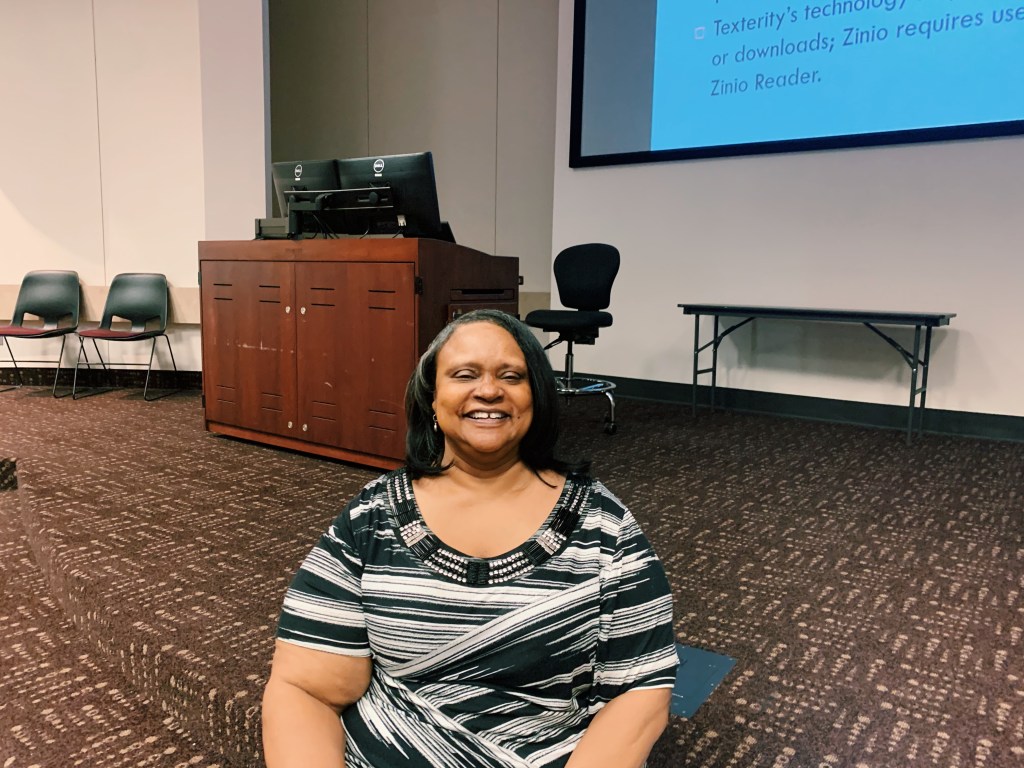
Professor Laurie Fluker
 The Bliss in Independence